Salman Jawed (Coalesce Design Studio) is well known in Dubai now after his successful presence at Design Days Dubai (2014 and 2016) and as curator of the Pakistan Pavilion during the first edition of Dubai Design Week. The architect shares with us his passion for his country as part of our Summer Design Diaries series.
“Walking through the winding cobblestoned lanes of the majestic Hunza Valley, in the northern Gilgit–Baltistan region of Pakistan, I discovered a part of Pakistan which never seizes to amaze me. Northern Pakistan is the host to three of the world’s biggest Mountain ranges that converge into creating a unique geographical feature. The Karakoram, Himalaya and the Hindukush together form one of the densest collection of mountain peaks in the world and Karimabad the capital of Hunza Valley is located in the heart of these mountain ranges at 2,500m elevation. It is made up of steep stone walled terraces that open up to mesmerizing views of the snow clad mountains and deep gorges with the Hunza River flowing in the center. There are roads built by the hills that lead you to glaciers and lakes and and numerous scenic and historical locations.
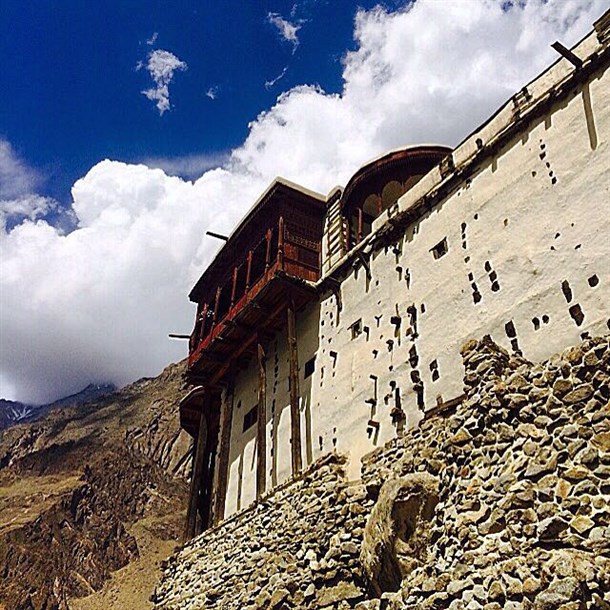
Baltit Fort
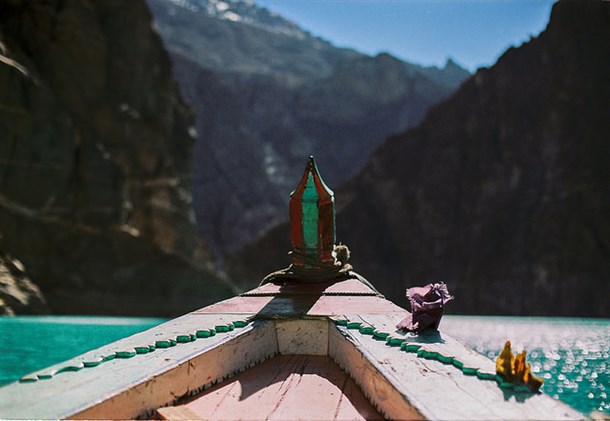
The town was a transitional space near the silk route and was used as a caravan halting place. It absorbed Tibetan, Chinese, British and Islamic influences creating a unique identity of its own. The landmarks around the town are the Baltit Fort (700 years old) and the Altit Fort (1100 years old), Queen Victoria Monument, Channel Walk and the snow clad mountains of Rakaposhi, Glaciers of Ulter Nala and the Attabad Lake which formed in 2010 after a landslide, making it one of the largest glacier lakes in the world.
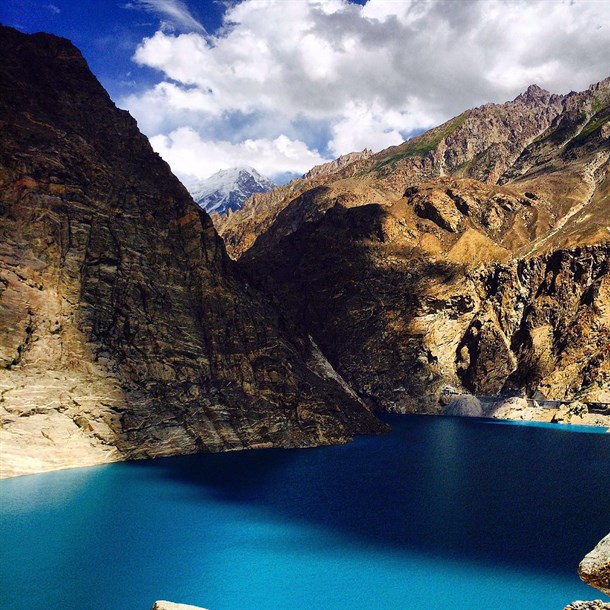
Attabad Lake
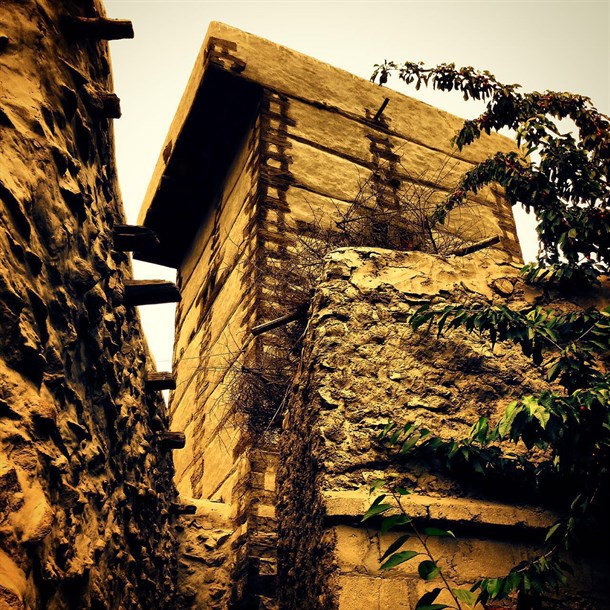
It is here that I saw history transcribed into the very fabric of the culture, be it architecture, textiles or town planning. The ancient Village of Ganesh (500 years old) in central Hunza is a perfect example. Located right on the Karakoram Highway it was recognized for its strategic location on the path of the silk route leading out to the Karakorum into Uighar China (Xing Kiang). The village started off as a single cluster of houses which later expanded to about seven clusters. The planning of the Village shows a close knit community and it focuses on three major components. A historic water pond called the Pharee, a two storied structure called the Sawab Ha which acted as a watch tower and is decorated with beautifully carved elements and finally the Jataq which is the heart of the whole scheme and is a common space used for shared activities. There is an ancient house which dates back 400 years old and is an architectural masterpiece which was formerly used by the envoy of the Mir of Hunza. This community has managed to preserve its essence and since its restoration by the Agha Khan Cultural Centre it is one of the most fascinating places I have ever been.
The design of the Baltit fort, which in the past ensured the survival of the feudal regime of Hunza , overlooks the Valley of Karimabad. The foundations of the fort dates back 700 years and was renovated in the 16th Century when the local prince married a princess from Baltistan who decorated it as a part of her dowry. You can find interesting motifs and patterns transcribed onto woodwork, architecture, and textiles. These very motifs and design elements seemed to echo throughout the mountains. Reproduced on boats, on modern building facades, cutlery and most prominently on cross stitch motifs worn as embroidered caps by the womenfolk as if they had been traced off the forts itself.
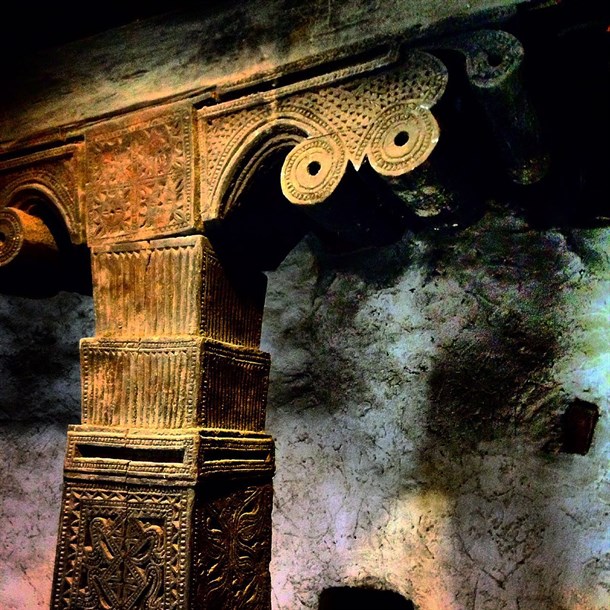
This connection between the architecture of the fort and textile is very intriguing and shows the complexity found in this region. The caps show history, superstition, folklore, myth, and reality cross stitched lovingly and painstakingly to be worn as a testimonial to ones being. Each motif had a story to tell…a lineage that was passed from mother to daughter through cherished samplers. From a particular stitch bringing good luck, to a millipede foretelling the birth of a boy, to the first bud of the harvest, each motif was a glimpse of history…motifs that documented it all. It was as if the valley was a cascade of history, biographies, and odes…to people long gone and yet to come.
With kind regards from Salman Jawed. (photo credit: Ali Kurshid and Noorulain Ali of Lighthouse Cinematic)

地址: 北京市 东城区 青龙胡同1号歌华大厦A座8层
邮编: 100007
电话: 13001992611
邮箱: info@bjdw.org